From Field to Fork: Three Steps Towards a Circular Food Chain
The Belgian agri-food industry has enormous circular potential, but is the circle already complete or does some of that potential remain untapped?
Food
In transition
The food industry is Belgium’s largest industrial sector. It accounts for a quarter of our total industrial turnover and, according to Fevia, the federation of Belgian food companies, it is the country’s main industrial employer (21% of all jobs). It is also a genuine SMESmall and medium-sized enterprises sector, with 95% of employers having fewer than 100 employees.
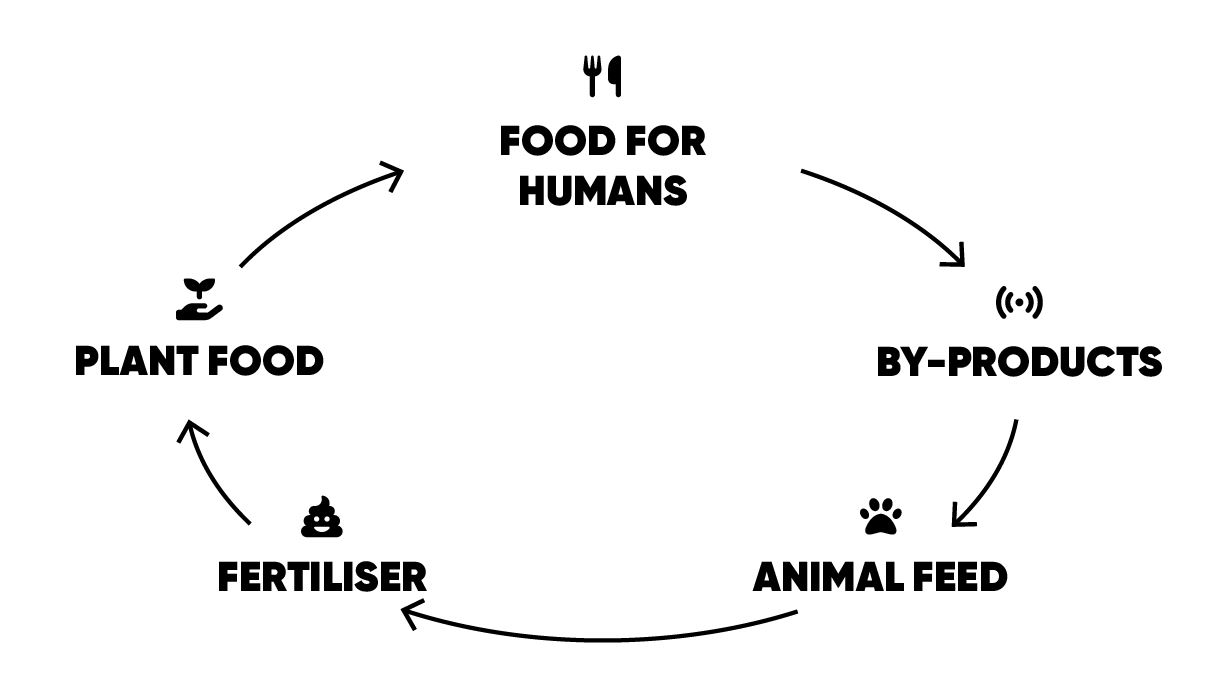
Food production is a circular process
The sector is an economic heavyweight, but does it also pull its weight in terms of circularityCircularity describes the quantity of materials managed in a closed loop.? The agri-food complex offers the advantage that organic waste streams are highly suitable for valorisation as food for humans or animals, as a renewable energyRenewable energy is energy derived from natural processes that are perpetually renewed, i.e. those of a solar, wind, hydraulic, geothermal or biomass origin. source or as a soil improver. Fevia even states that almost 100% of organic by-products from the Belgian food industry is given a second (or third) life.
Choose the right parameters
The food industry clearly has enormous circular potential. International research from 2025 examined the strategies used by companies in the global agri-food chain to work circularly. The conclusion? We’ve come a long way, but companies are not yet sufficiently familiar with how to select the right measurable targets. By setting achievable and concrete parameters, food companies can better monitor and improve their circular performance. Extending the lifespan of a product is not always possible in the food industry, but there are many other areas to focus on.
Some examples:
Choose raw materials from regenerative farming
Map and valorise by-products
Prevent food waste
1. Choose raw materials from regenerative farming
Raw materials from farmers who implement circular agriculture principles form the basis of a truly circular product. Agroecological or regenerative farming is not a label but a mission to close cycles in plant and animal care. The core principles include biodiversity and soil health, reduced use of crop protection products and artificial fertiliser, using high-quality manure from local livestock, and valorising residual waste streams in animal feed. Organisations such as Farming for Climate, Cultivaé and House of Agroecology support farmers in this transition and connect them with chain partners willing to grow together.
2. Map and valorise by-products
Numerous initiatives have been set up to support companies in the agri-food chain. Waloval, a project within Circular Wallonia, examines the potential of by-products such as wheat bran, rapeseed meal, brewing barley and apple peels. It also seeks to remove legal barriers and explore opportunities to reintegrate reused raw materials into the value chain. One company doing this is Linatelle in Trooz, which markets healthy biscuits made from residual streams from brewing barley in collaboration with Belgian brewery Val Dieu. An inspiring example from Brussels is Harvie, an organisation that processes vegetables that don’t meet aesthetic standards into soups, sauces and granolas. Unsure how to set up these collaborations? Read more about it on the Go for Circular
website of the FPS Economy.
3. Prevent food waste
Both companies and consumers share responsibility for reducing food losses. For SMEs, good planning, smart procurement policy and efficient stock management are crucial. Be creative with leftovers and track what is discarded. Then use the insights gained to make the necessary adjustments. Seek advice from companies and organisations actively working to reduce food waste on a daily basis. Initiatives such as Waste Warriors
and Happy Hours Market ensure that perfectly edible food at risk of ending up in the bin still reaches consumers.
For more information on circular practices in the food industry, visit the Go for Circular website of the FPS Economy.