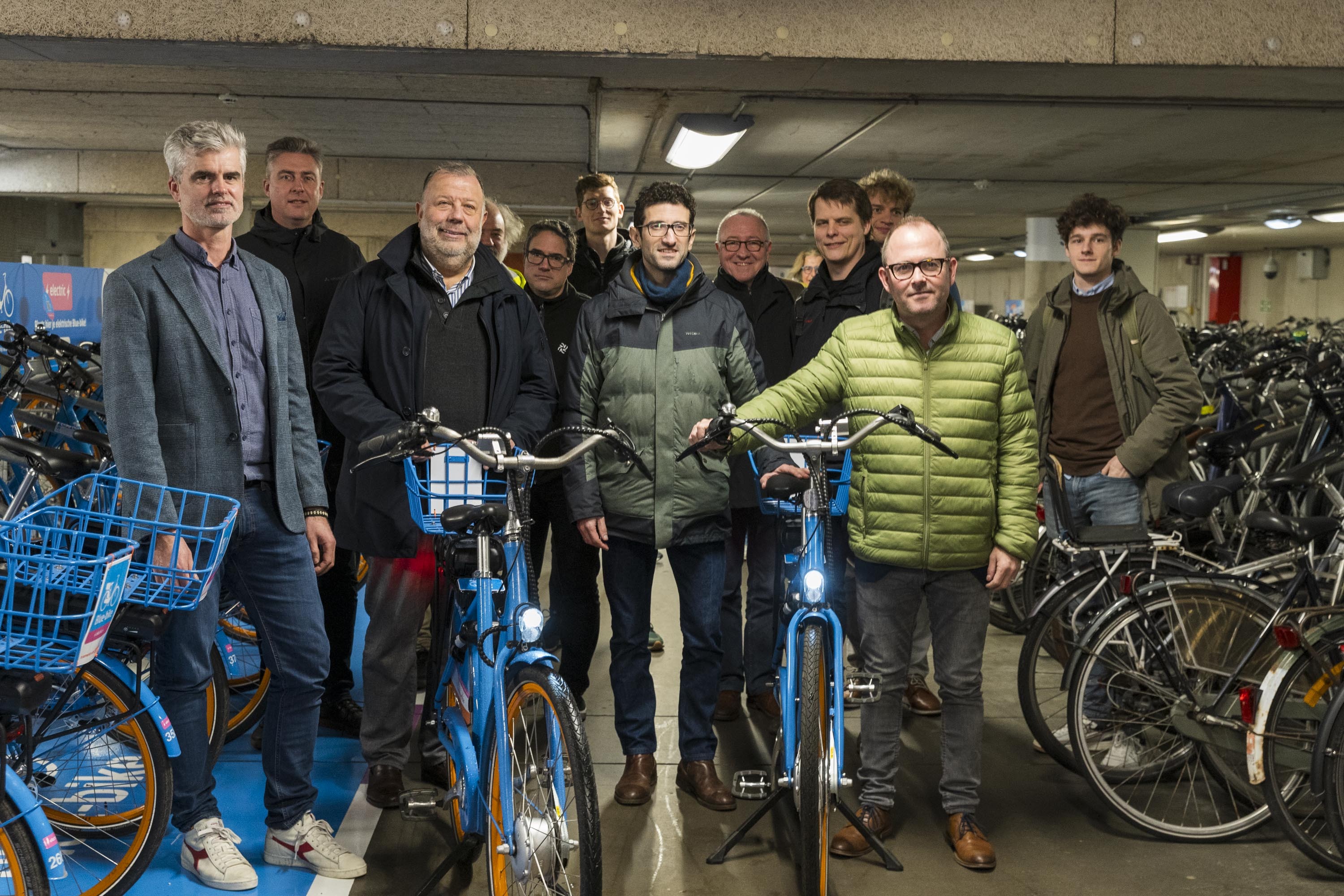
Development of 4.0 Circular Bikes With Optimal Management of Resources
Blue-Mobility is one of the winning companies of the "BELGIUM BUILDS BACK CIRCULAR" (BBBC) call for circular economy projects. The Blue-Bike project capitalises on the growing demand for electric bikes in urban areas and combines technological innovation with societal impact. At the same time, it is creating new training and employment opportunities in Belgium.
A Zero Waste Approach on Two Wheels
The Blue-Bike project gives new life to existing mechanical bikes by cleverly converting them into electric bikes. Lansink's waste hierarchy served as inspiration in this regard: the company prioritises prevention and reuse over recycling, to minimise waste generation. The main goal is to maintain the circularity of bike parts through maintenance and repair.
Thanks to a comprehensive refurbishment approach, almost all of the bikes purchased since 2011 are still in use today. Maintenance partners - often socially-inclusive companies - carry out repairs and replacements so that the bikes are once again fully usable. As these partners work not only with economic, but also social and ecological values, a partnership is created in which sustainability is the main focus. Up until now, not a single bike has left the Blue-bike fleet, thanks to regular maintenance, repairs and refurbishments that give them multiple life cycles. This model is just as good economically as traditional models, and also helps attract motivated and loyal employees.
Sustainability, Local Impact and Scaling Up
The company studies environmental problems related to resource scarcity, imports of electronic components and overproduction. It aims to reduce CO2 emissions by encouraging the use of electric bikes and conventional bikes, as well as taking into account the CO2 emissions linked with the production and use of raw materials.
By partnering with local companies for producing and maintaining bikes, the company is creating new training and employment opportunities in Belgium, benefiting the local economy and creating social impact. Since securing the support of the FPS Public Health through the BBBC fund, the project has expanded significantly: from around 10 locations with about 60 e-bikes to nearly 100 locations with some 700 bikes in use. This expansion required moving from test phase to full-scale production and taking on new partners, including for battery charging.
The Technological Challenges of Electric Mobility
The Blue-Mobility team faces major challenges in integrating IT technology into their application, such as accurately tracking self-service e-bikes via GPS. For this, a small, intelligent device ("IoT") is added to the bike that communicates with a central system and other electronic components of the bike. The data collected are processed according to the regulations in force.
Blue-Bike embodies a model in which circularity and zero waste come together for more sustainable mobility. Future plans include further expansion, in places where electric mobility makes sense and with continuous optimisation of the bikes based on user feedback.
Government Support as a Lever For Circularity
The project received support from the BBBC fund, through which the FPS Public Health supports circular innovation with funds from the EU's NextGeneration programme. This funding allowed Blue-Mobility to fully focus on its core mission: creating a circular mobility model that combines reuse, social inclusion and technological innovation. The support allowed rapid scale-up from test phase to production, attracted new partners and significantly expanded the fleet. This not only created jobs, but also gave more and more citizens access to sustainable mobility.